What Makes a Great Plumber Website in Australia? (2026 Guide)
Plumbing websites have one job: turn emergency searches into phone calls. Here's exactly what your site needs to make that happen.
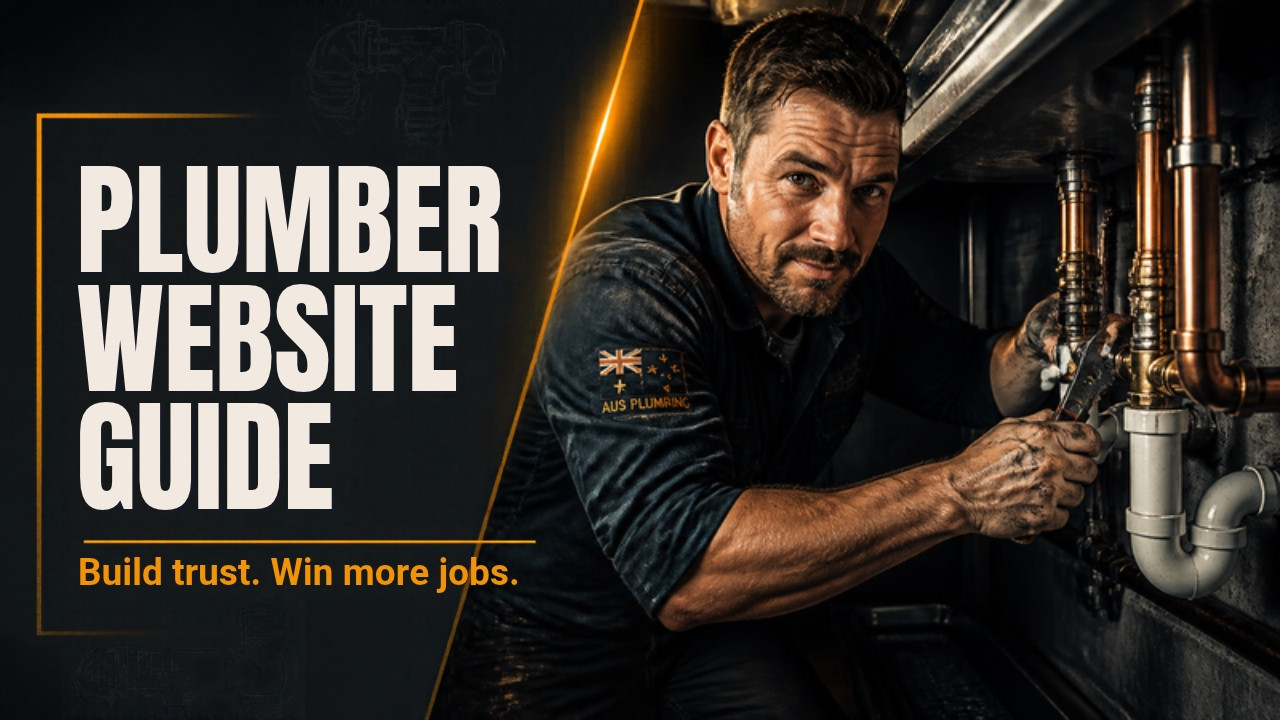
When someone searches “blocked drain” or “hot water repair,” they’re rarely browsing. Water’s on the floor, the shower’s cold, or the toilet won’t stop running — and they’re going to call whichever plumber’s website convinces them fastest that help is on the way. That urgency changes what a plumbing website actually needs to do. It’s not there to tell a brand story. It’s there to get a phone ringing in the next sixty seconds. Here’s what that takes.
1. Click-to-Call Has to Be Instant
If someone’s searching from their phone with water pooling on the bathroom floor, they are not going to hunt for your number. It needs to be pinned at the top of the screen — a real tap-to-call button, not plain text they have to copy and dial manually. Every second spent looking is a second closer to them giving up and calling the next plumber on the list.
This matters more for plumbing than almost any other trade, because a huge share of plumbing searches happen in the middle of an active problem. Design for that moment, not for someone casually comparing quotes next week.
2. Your Licence Number Builds Instant Trust
In NSW, a licensed plumber has to display their licence number — and putting it visibly on every page does more than tick a compliance box. It’s the fastest trust signal you have. A stressed customer letting a stranger into their home to deal with their plumbing wants quick reassurance that you’re legitimate before they hand over the keys to their bathroom.
Put it in the footer so it shows on every page, and consider repeating it near your contact details and on the about page. It costs nothing and it answers the “can I trust this person” question before they’ve even finished reading.
3. Build Service Pages Around How People Actually Search
Most plumber websites have one generic “services” page listing everything from blocked drains to gas fitting in a single paragraph. That’s a missed opportunity — and it’s also invisible to Google for the searches that actually convert into jobs.
People search specifically: “blocked drain Parramatta,” “hot water repair Penrith,” “gas fitting Liverpool.” A single combined services page can’t rank for all of those at once. Dedicated pages — one for blocked drains, one for hot water systems, one for gas fitting, each naming the suburbs you cover — give Google exactly what it’s looking for, and give the customer the exact match to what they typed. That’s the difference between ranking on page one for “hot water repair [suburb]” and not showing up at all.
4. Show Real Photos of Real Work
Stock photos of a smiling model in a spotless uniform holding a wrench they’ve clearly never used are an instant red flag. People can spot them immediately, and the read is always the same: this business either has nothing to show or something to hide.
Photos of completed bathrooms, newly installed hot water units, and finished drainage work do the opposite — they prove you’ve actually done the work you’re claiming to do. You don’t need a professional photographer. A few clear phone photos of finished jobs, with the customer’s permission, will do more for conversions than any stock image library.
5. Say Clearly Whether You Do After-Hours Work
Burst pipes and failed hot water systems don’t wait for business hours, and when they happen outside 9-to-5, the customer is actively searching for who’s available right now. If you offer emergency or after-hours callouts, that needs to be stated plainly — ideally near your phone number, not buried in an FAQ.
If you don’t do after-hours work, that’s fine too, but say so. A customer who can see upfront that you’re not available at 11pm won’t waste their time calling and yours answering, and they’ll trust the rest of your site more for being straightforward about it.
6. List Your Service Area by Suburb, Not Just “Sydney”
“Servicing Sydney” tells a customer almost nothing about whether you’ll actually come to their address, and it does nothing for your search visibility either. List the actual suburbs you cover — Parramatta, Blacktown, Penrith, wherever your real service area is — on your homepage and on each service page.
This does double duty: customers get a direct answer to “do they come to me,” and Google gets the suburb-level relevance signals it needs to show your site for local searches instead of a national plumbing directory with none of your actual local knowledge.
The Pattern Behind All Six
Every point here comes back to the same thing: a plumbing search is usually a problem in progress, not idle research. The website that wins the job is the one that removes friction — a number that’s one tap away, trust signals that answer “can I rely on this person” instantly, and pages that match exactly what the customer typed into Google. Get those right and the phone starts ringing from searches you’re not even actively chasing.
A site that’s slow, generic, or missing any of the above isn’t losing you jobs loudly — it’s losing them silently, to whichever plumber up the search results made it easier to call. See Plumber website design NSW for what a purpose-built plumbing website looks like.
Ready to build a plumbing website that converts? Get a free quote from ShareWeb Agency — fixed-price tradie websites from $1650.
Alfred runs ShareWeb Agency, a website design business for Australian tradies and construction businesses.
Ready to get your tradie website built?
Fixed price. 1–2 week delivery. Free consultation, no obligation.
Get a free quote →